
Commercial
What Is a Schedule of Values? A Glazing Contractor's Guide
A schedule of values breaks a contract into billable line items. What goes in one, how it maps to the AIA G703, and how to build one that fits cash flow.
9
min read
•
October 11, 2026
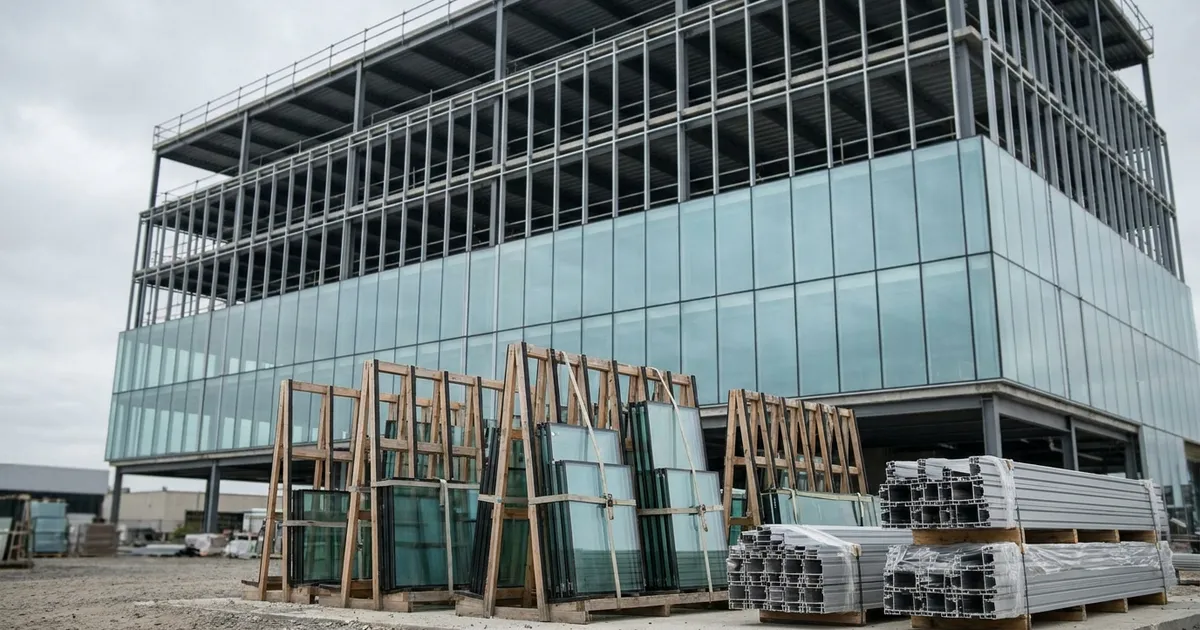
A schedule of values is a breakdown of a construction contract into individual line items, each with a dollar value, that together add up to the full contract sum. It is the document that decides how you get paid. Every progress payment you invoice is a claim that some percentage of specific line items is complete, and the schedule of values is the list those percentages refer to.
For a glazing contractor it is usually the single most consequential piece of paperwork on a commercial job, and it is normally submitted before any glass is ordered. Get it right and your cash flow follows your actual work. Get it wrong and you spend the job funding someone else's schedule.
What a schedule of values actually is
On a commercial project the general contractor asks each subcontractor to divide their contract into line items. A glazing contract worth $840,000 might break into storefront, curtain wall, interior glazing, doors and hardware, sealants, shop drawings, mobilization and closeout.
Each line gets a value. The values must total the contract sum exactly.
Once approved, that breakdown becomes fixed for the life of the job. Each month you submit a payment application saying what percentage of each line is complete, and the general contractor pays on that basis.
The schedule of values is not an estimate and it is not your internal cost breakdown. It is a billing instrument, and it is visible to the general contractor, the architect and often the owner and the lender.
How it connects to AIA G702 and G703
If your project uses the standard AIA forms, the schedule of values is the G703. That is what the form is: a continuation sheet listing every line item, its scheduled value, work completed previously, work completed this period, stored materials, total to date, percentage complete, balance to finish and retainage.
Many commercial jobs bill on the AIA G702 payment application, filed with a G703 continuation sheet that breaks the contract sum into a schedule of values.
The G702 is the one page cover sheet that summarizes the G703 and carries the signatures. You cannot fill in a G702 without a G703 behind it, because every figure on the cover is a total pulled from the continuation sheet.
If those forms are new to you, start with our guide to what AIA billing is and how the G702 and G703 work together, then come back to how the line items themselves should be built.
Why this matters more for glaziers than for most trades
Glazing has a cash flow shape that punishes a badly built schedule of values.
The money goes out early. Shop drawings, engineering, and a large materials order all happen months before anything is installed. On a curtain wall package the fabrication commitment can be a substantial share of the contract value and it lands long before there is any installed work to bill against.
If the schedule of values has no line for shop drawings, no line for engineering and no mechanism for stored materials, none of that early spend is billable. The contractor carries it, sometimes for two or three months, on a job that is technically on schedule.
The trades that install progressively from day one do not feel this. Glazing does.
What to put in one
The right level of detail is more granular than most contractors submit, and the reason is simple: you can only bill for a line that exists.
Separate the pre installation work
Shop drawings, engineering and permits should be their own line items. This work is genuinely complete before glass arrives and it is legitimately billable when it is done.
Break installation by area, elevation or floor
One line reading "curtain wall, $420,000" forces you to argue about percentages every month. Lines by elevation or by floor let you bill what is objectively finished. Percentage disputes usually come from lines that are too big to observe.
Include a stored materials line
Most contracts allow billing for materials delivered and properly stored, usually with conditions about insurance and location. If your schedule of values has nowhere to put them, that right is unusable.
Separate labor from material where you can
Their percentages diverge. Material can be fully delivered while installation is a quarter done, and a combined line cannot express that.
Keep closeout realistic
Warranties, O&M manuals and punch list work need enough value to be worth doing, but an inflated closeout line is the first thing a general contractor challenges.
A worked example
An $840,000 storefront and curtain wall package on a four story building might break down like this:
| Line item | Value |
|---|---|
| Mobilization and submittals | $25,000 |
| Shop drawings and engineering | $60,000 |
| Curtain wall material, north and east elevations | $180,000 |
| Curtain wall material, south and west elevations | $165,000 |
| Curtain wall installation, floors 1 and 2 | $120,000 |
| Curtain wall installation, floors 3 and 4 | $115,000 |
| Storefront material and installation | $95,000 |
| Doors and hardware | $45,000 |
| Sealants and perimeter | $20,000 |
| Closeout, warranties and punch | $15,000 |
| Total | $840,000 |
The point of that structure is that in month two, with drawings approved and the first material delivery in a bonded warehouse, there is something real to bill: the submittals line, the engineering line, and stored materials against the first elevation. A schedule with three lines reading material, labor and closeout would show almost nothing complete in the same month, on a job running exactly to plan.
Want to see a schedule of values like this one built from the estimate and billed from the field? Book a Glazier demo.
Mistakes that cost money
Front loading. Loading early line items above their real value to improve cash flow is common, widely recognized, and increasingly checked.
Architects and lenders review schedules of values specifically for it. If it is caught, the whole schedule gets scrutinised and approval is delayed, which costs more than the front loading was worth.
Too few line items. The most frequent and most expensive error. Every month spent arguing about whether a line is 60 or 75 percent complete is a month of delayed cash, and the argument only exists because the line is too coarse to observe directly.
Submitting late. The schedule of values usually has to be approved before the first payment application. A late submission delays the first payment on the entire contract, not just the disputed part.
Ignoring retainage. Retainage, commonly five or ten percent, is withheld from every payment until closeout. Your schedule should be built knowing that the percentage complete you bill is not the percentage of cash you receive.
Letting it drift from reality. Change orders add lines. If the schedule of values is not maintained alongside them, the billing document and the actual contract diverge, and reconciling them at closeout is painful.
Keeping it accurate through the job
A schedule of values is only useful if the percentages you submit match what has actually been installed. On a job with several elevations and multiple crews, that information usually lives in a foreman's head or a phone photo until the day the payment application is due.
The contractors who bill cleanly are the ones whose field progress is recorded against the same line items they bill against. When installed quantities per elevation are tracked as the work happens, the monthly payment application becomes a report rather than a reconstruction, and the percentages hold up when the general contractor questions them.
How we build the schedule of values from the job
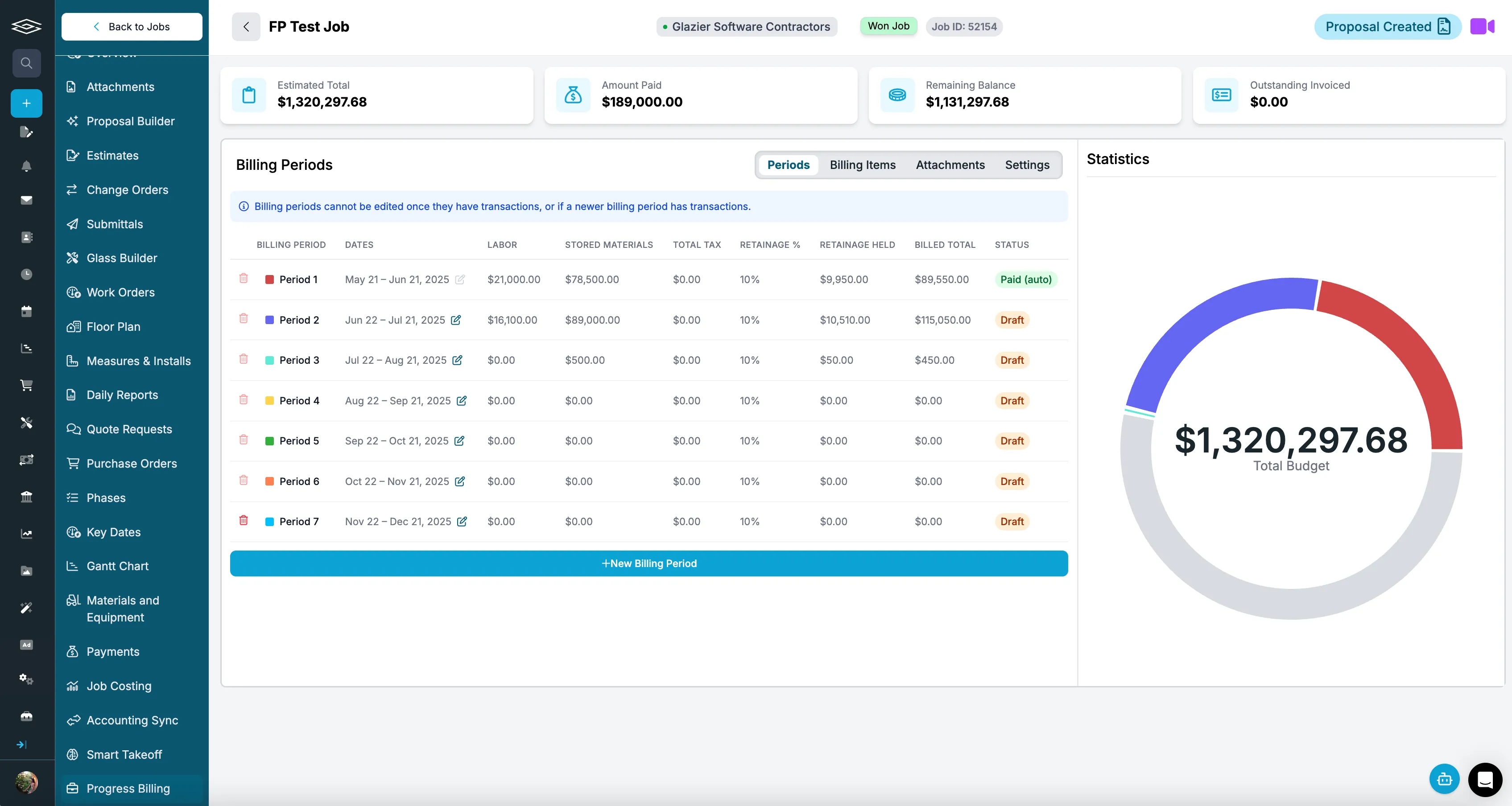
We built Glazier so the schedule of values and the pay application come from the job itself. With AIA and progress billing, your schedule of values is built from the estimate, and retainage is tracked per line. You bill by phase and percent complete, tied to the progress the field reports, and the G702 and G703 are generated for you.
That field progress comes from our floor plan tool. Each opening is tracked as framed, glazed and complete, and the crew updates it on a tablet on site. Change orders flow straight into your AIA billing and schedule of values, so an approved change does not drift away from the billing document.
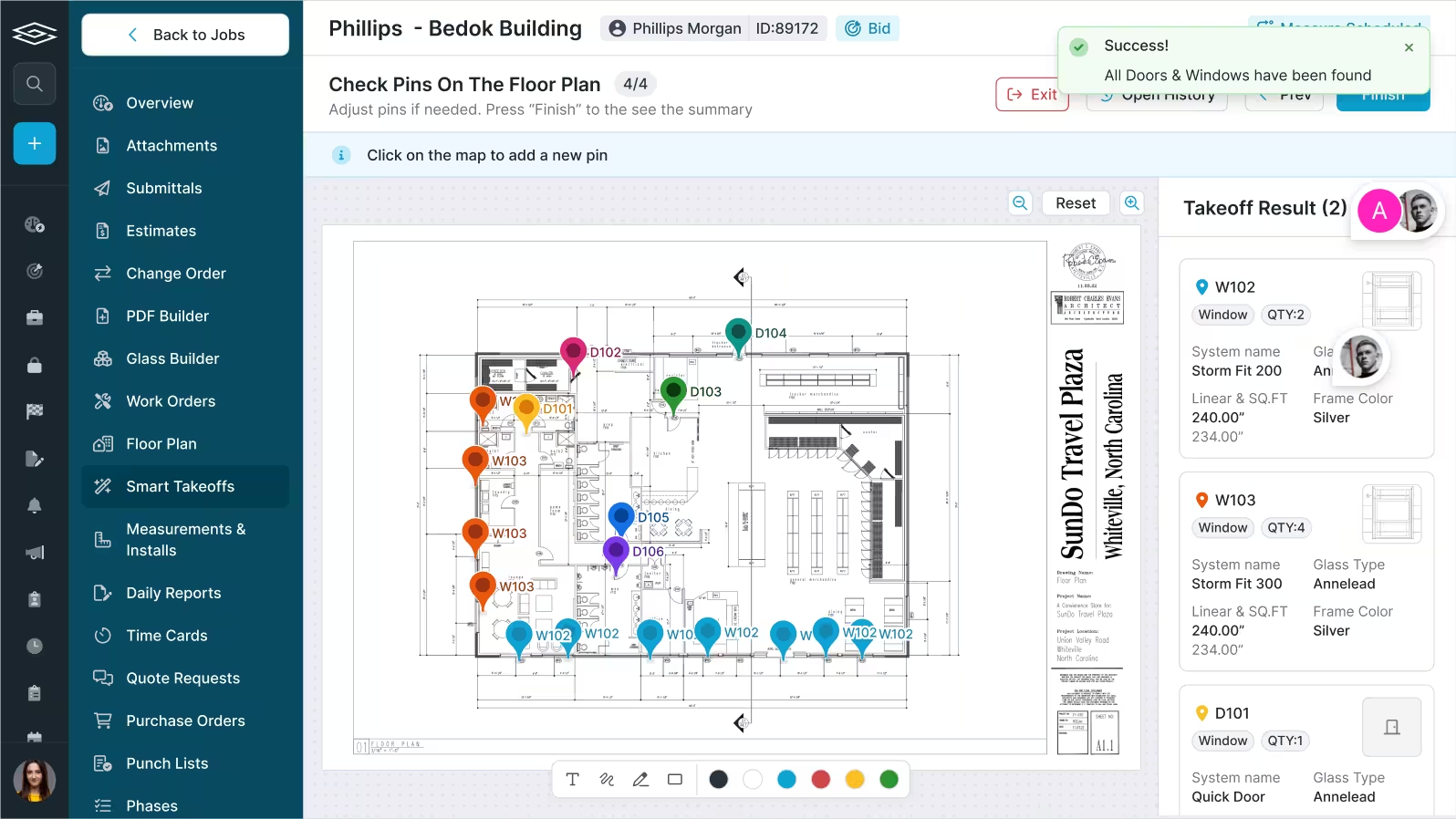
Take a hypothetical month three on the $840,000 package above, with floors 1 and 2 set up as one phase. The crew marks openings glazed on the floor plan as they finish them.
On billing day, the percent complete for that installation line comes from what the field reported, not from a foreman's memory. An approved change order is already on the schedule of values, and retainage is held line by line.
To see your own pay application built this way, book a Glazier demo.
Frequently asked questions
What is a schedule of values in construction?
A schedule of values is a breakdown of a construction contract into individual line items, each assigned a dollar value, that together equal the total contract sum. It is submitted to the general contractor at the start of a project and becomes the basis for every progress payment. Each payment application states what percentage of each line item is complete, so the schedule determines what you are able to bill and when.
Is a schedule of values the same as an AIA G703?
Yes, on projects using the standard AIA forms. The G703 continuation sheet is the schedule of values, listing each line item with its scheduled value, work completed to date, stored materials, percentage complete, balance to finish and retainage. The G702 is the cover sheet that summarizes it and carries the signatures.
How detailed should a schedule of values be?
More detailed than most contractors submit. You can only bill against a line that exists, so pre installation work such as shop drawings and engineering should be separated out, installation should be broken by elevation or floor, and stored materials need their own line. Lines that are too large to observe directly are the usual cause of monthly percentage disputes.
Can you bill for materials that are not installed yet?
Usually yes, if the contract allows for stored materials and the schedule of values has a line for them. Conditions normally apply, such as proof of delivery, appropriate storage and insurance. This matters more in glazing than in most trades because fabricated material is committed months before installation begins.
What is front loading a schedule of values?
Front loading is assigning higher than actual values to early line items so that more money is collected at the start of a job. It is well known to general contractors, architects and lenders, and schedules are reviewed for it. Being caught typically means the entire schedule is challenged and approval is delayed, which usually costs more than the improved early cash flow was worth.
When is the schedule of values due?
Normally before the first payment application, and often within a set number of days of contract execution. Because the first payment on the whole contract depends on it being approved, a late schedule of values delays all of your billing, not just the part under discussion.
Explore Our Success Stories


Streamline your glazing operations.
Book a demo today and find out how Glazier can transform your glass business.
The all-in-one platform built for glass & glazing — quoting to cash, powered by AI.